

When you have work, family and daily responsibilities all competing for your time, caring for yourself can fall down the priority list. But it doesn’t require a costly treatment, a full schedule, or an ideal morning routine to practice self-care.
This guide includes helpful activities, easy ways to organize them and when to seek assistance from a health professional. Select the concepts which are suitable to your health, budget, and time.
What Does Self-Care Mean for Women’s Health?
Self-care involves everyday practices that support your well-being and recognising when professional advice is needed.
The Different Types of Self-Care Women Need
Self-care activities for women generally fall into four areas:
- Physical: Eating, resting, and moving in ways that suit your body.
- Mental: Making space to focus and manage everyday pressures.
- Emotional: Understanding feelings and expressing needs.
- Social: Maintaining supportive connections.
Equal time need not be provided for each area. The most helpful place to start is based on what you lack in your life.
Why Small, Consistent Habits Matter
One of the most practical self-care tips for women is to start with something easy to repeat. Make a new habit with an old one, like drinking water before or after breakfast or some minutes after work.
Keep the action as small as possible and fit into a normal day. If your schedule changes, adjust the habit instead of abandoning it.
Simple Physical Self-Care Activities for Women
Sleep, nutrition and movement form the basis for everyday wellbeing. Focus on achievable changes rather than strict rules.
Move Your Body in Ways You Enjoy
Useful self-care activities for women include walking, dancing, gardening, swimming, or seated exercises. Select an activity that suits your ability.
CDC guidelines suggest that adults aim for 150 minutes of moderate activity per week and two days of muscle strengthening activities. Activity can be divided into shorter sessions. If pain or pregnancy-related issues or medical conditions prevent you from doing a certain activity, discuss suitable modifications with your clinician.
Support Your Body With Simple Meals and Hydration
Easy self-care ideas for women can begin with preparing food that is satisfying and convenient:
- Include fruit, vegetables, or beans in a favourite food.
- Have practical choices like eggs, yoghurt or whole grains on hand.
- Keep water or other appropriate fluid at hand at meals and daily activities.
There is no need to follow a special diet or set water goal. Nutrition and fluid requirements are dependent upon health status, medications, and activity.
Make a Calmer Sleep Schedule
A basic self-care routine for women should leave enough opportunity for sleep. The CDC advises that adults ages 18–60 generally need at least seven hours each night.
Get into a regular sleep schedule, use a soft light to wind down at night, and have a cozy bed. Try to minimize distractions when possible. Special arrangements may be needed for shift work or caring for others; if you can’t sleep for a long time or you snore loudly, seek medical advice.
Mental and Emotional Self-Care Ideas for Women
Living in your normal environment also involves your mind, your emotions and your relationship. These activities promote well-being and are not a substitute for mental health treatment.

Practice Mindfulness or a Five-Minute Breathing Pause
A simple form of mental health self-care for women is pausing to notice the present moment. Sitting comfortably, place your feet on the floor, and take several natural breaths, but don’t push.
If focusing on breathing is uncomfortable, pay attention to sounds or objects around you instead. While for some, mindfulness can be a tool to help with stress, it is not required and should not be used as a substitute to medical or mental health care.
Try Journaling and Emotional Check-Ins
Journaling offers another approach to mental health self-care for women. Write short sentences, rather than paragraphs, for one question only:
- What is distressing me today?
- What would make tomorrow easier?
- Is there something I need to ask for?
A few lines, a voice note or just a private check-in could be sufficient. The intent is to notice patterns, not to force positive thinking.
Set Healthy Boundaries and Stay Connected
Relationships are part of mental health self-care for women. Make it obvious to people when you’re not available, and allow for discussion where you can do so openly.
For example, you might decline an extra commitment but arrange a short call with someone you trust. Connection that is healthy is quality rather than quantity. If you need more support, learn about our Mental Health Screening and care.
Easy Self-Care Ideas at Home for Women
Home-based activities can provide enjoyment or comfort without appointments, special equipment, or significant expense.
Enjoy a Screen-Free Creative Activity
Affordable self-care ideas at home for women include reading, drawing, knitting, listening closely to music, or tending plants. Select a task that you are going to enjoy doing, not one you feel you “should” do.
Keep a book or a simple craft nearby for a free moment. A hobby does not have to be of any tangible benefit to be worth your time.
Make Skincare or a Relaxing Ritual Part of Your Day
Gentle skincare is one of the self care ideas at home for women. Apply a mild cleanser and moisturizer that is suitable for your skin and a broad spectrum SPF 30 and up sun block during the day.
The American Academy of Dermatology notes that expensive products are not necessary for an effective routine. Don’t use products that irritate your skin and if you experience ongoing issues, ask health care professionals for help.
How to Build a Daily and Weekly Self-Care Routine
Select healthy habits that coincide with your current lifestyle. A routine should not increase work but rather provide helpful activities.
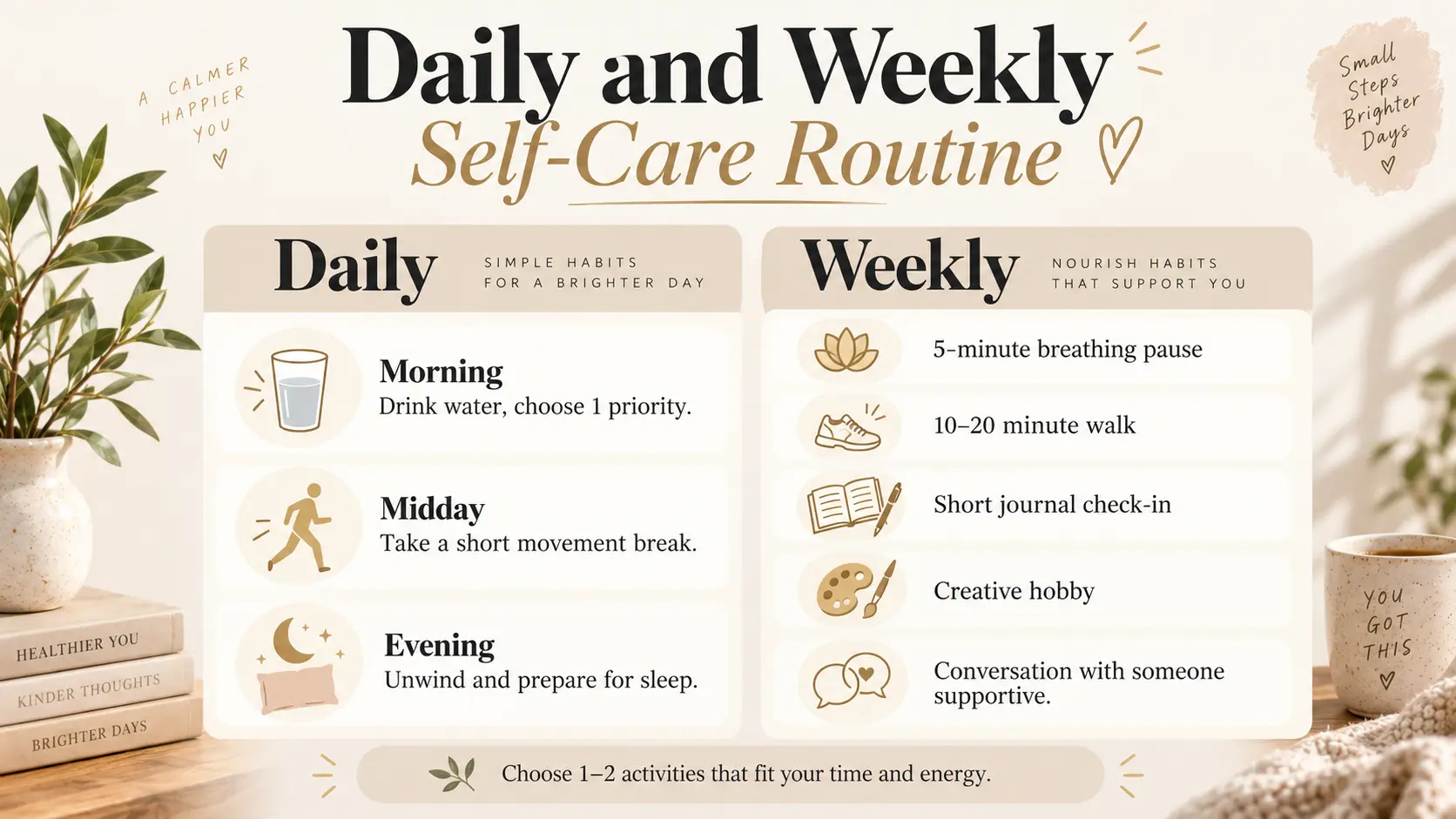
Start With a Simple Morning and Evening Routine
A daily self-care routine for women can use two flexible anchors:
- Morning: If it’s suitable for you, have breakfast, make a drink and choose one realistic priority.
- Evening: Gather together tomorrow’s items and select a calming activity at night.
Keep only the steps that make your day easier. Different times and sequences may be needed to work at night or care for family.
Create a Flexible Weekly Self-Care Plan
A weekly self-care routine for women works best as a menu, not a strict checklist. Select activities based on time and energy available.
| Self-Care Activity | Estimated Time | Effort Level |
| Quiet breathing break | 5 minutes | Low |
| Walk or gentle movement | 10–20 minutes | Low–moderate |
| Short journal entry | 5–10 minutes | Low |
| Creative hobby | 15–30 minutes | Flexible |
| Catching up with someone | 10–20 minutes | Flexible |
These times are only examples and not medical targets. Select one or two options for the week and change them as needed.
Self-Care for Busy Women and Different Life Stages
Time, energy and health requirements are not fixed. You can make things easier for self-care with small adjustments.
Quick Self-Care Activities for Busy Days
Some self-care ideas at home for women fit into ordinary gaps in the day. Take a break from work, go to lunch away from the screen or spend a few minutes outside, or during a break, disable unnecessary notifications.
Pick one action to perform rather than an entire workout. If you don’t have time to focus on your basic needs, then practical support or redistributed tasks might be more important than another wellness activity.
Adjust Self-Care as Your Needs Change
Good self-care tips for women account for menstrual symptoms, pregnancy, postpartum recovery, perimenopause, menopause, disability, and chronic illness.
For instance, on days when the energy level is lower, it may be better to rest or move in an accessible manner, rather than work out. Meals during the caregiving time may be easier to prepare, and assistance could be needed. New or persistent symptoms deserve individualized clinical advice rather than generic wellness recommendations.
Common Self-Care Challenges and How to Manage Them
When a plan is difficult to maintain, identify the barrier before changing the entire routine.
When You Feel Guilty About Taking Time for Yourself
One of the self-care tips for women that is useful is to treat some time as a necessity, not as a reward for finishing what you have to do.
Make a reasonable time for yourself and make a decision about what can be done later or together. You can be concerned about others and not neglect yourself. The decision doesn’t need to be made based on guilt.
When Time, Money, or Energy Is Limited
Easy self-care ideas for women should not rely on spending money or expending energy. Consider three alternatives:
- No budget: Check out a library book or borrow a community space.
- Low energy: Rest with quiet music or another comfortable activity.
- Little time: Shield a short time, instead of organizing a lengthy session.
Persistent exhaustion is worth discussing with a clinician, especially if it is new or affects daily functioning.
Why Preventive Healthcare Belongs in Your Self-Care Plan
Healthy habits and medical care are different things. Preventive appointments help you discuss risks, screenings and concerns that daily habits cannot identify.
Discuss Checkups and Recommended Screenings With Your Provider
A self-care routine for women should make room for appropriate healthcare conversations. Depending on your age, history, symptoms, and risk factors, these may involve:
- Blood pressure and heart disease risk.
- Breast or cervical cancer screening.
- Medical review or screening for depression or vaccinations.
There is no ‘one size fits all’ screening schedule. HRSA’s women’s preventive services guidance provides a useful starting point for discussions.
Through Women’s Health and primary medical care services, we can help review concerns and coordinate appropriate next steps or referrals.
Understand when self-care isn’t sufficient
Mental health self-care for women can support daily coping, but persistent sadness, loss of interest, disrupted sleep, or difficulty functioning may require evaluation. The National Institute of Mental Health advises getting professional assistance if symptoms are severe or distressing for two weeks or more.
Other symptoms that should be evaluated include unexplained pain, unusual bleeding and persistent fatigue. For severe or rapidly deteriorating symptoms, get urgent care. For immediate danger, seek emergency care. Avoid postponing assessment to adopt new self care practices.
Start Small and Make Self-Care Work for You
Select one activity that is useful today, and make a change as your needs evolve. A sustainable approach is not one that you have to do, but one that you can do.
Personal habits are just one aspect of good health. If you have concerns about symptoms, screenings, or preventive care, it’s important that you get advice from a professional.
Our team at Patients Choice Clinic in Burbank supports women with personalized healthcare conversations and appropriate follow-up. Contact our clinic to discuss your health and wellness needs.
Frequently Asked Questions About Self-Care for Women
What are five simple self-care activities for women?
Do light activity, find a short mindfulness space, engage in a creative activity, spend some time with a supportive person, and create a simple bedtime routine. The best choices are those you can comfortably use in your circumstances.
How do I start a daily self-care routine?
Select one habit that it is currently necessary to adopt. Make it a part of a current habit, make the initial step simple, and assess its effectiveness over a week’s time.
What are some easy self-care ideas at home?
Reading, music, gentle skincare, crafts, and quiet time are accessible options. The activity can be modified to suit your interests, space, physical ability and energy level.
How can busy women practice self-care?
Choose short and specific opportunities in the day. If even short breaks are difficult, focus on practical support, sharing responsibilities, and protecting time for meals and rest.
Does self-care include mental and emotional health?
Yes. Emotion awareness, boundary setting and supportive relationships are important aspects of self-care. Symptoms that persist or get worse may also require a professional mental health evaluation.
Can self-care replace a regular health checkup?
No. Screenings, diagnosis or treatment cannot be replaced by everyday habits. Discuss with a health care provider, what preventive services and follow-up visits are right for you.